
The Week I Realized I Was Learning the Wrong Thing
In a week of nonstop AI launches, why the best investment is still timeless design fundamentals: trust, craft, and clear decision quality.
A designer friend told me she spent her Saturday learning a new AI design tool. By Monday, another one launched. By Tuesday, social media was full of hot takes. By Wednesday, she felt exactly the same as before the weekend: anxious and behind.
I keep hearing versions of this story. We try to catch up by learning interfaces, but interfaces are the layer that changes fastest. The result is a lot of movement and not much confidence.
The better question
Jeff Bezos once said most people ask what is going to change in the next decade, but the more useful question is what is not going to change. That framing has become my anchor for AI design.
If we only optimize for what is new, we become permanently reactive. If we optimize for what is stable, we compound.
A Tom and Jerry reminder
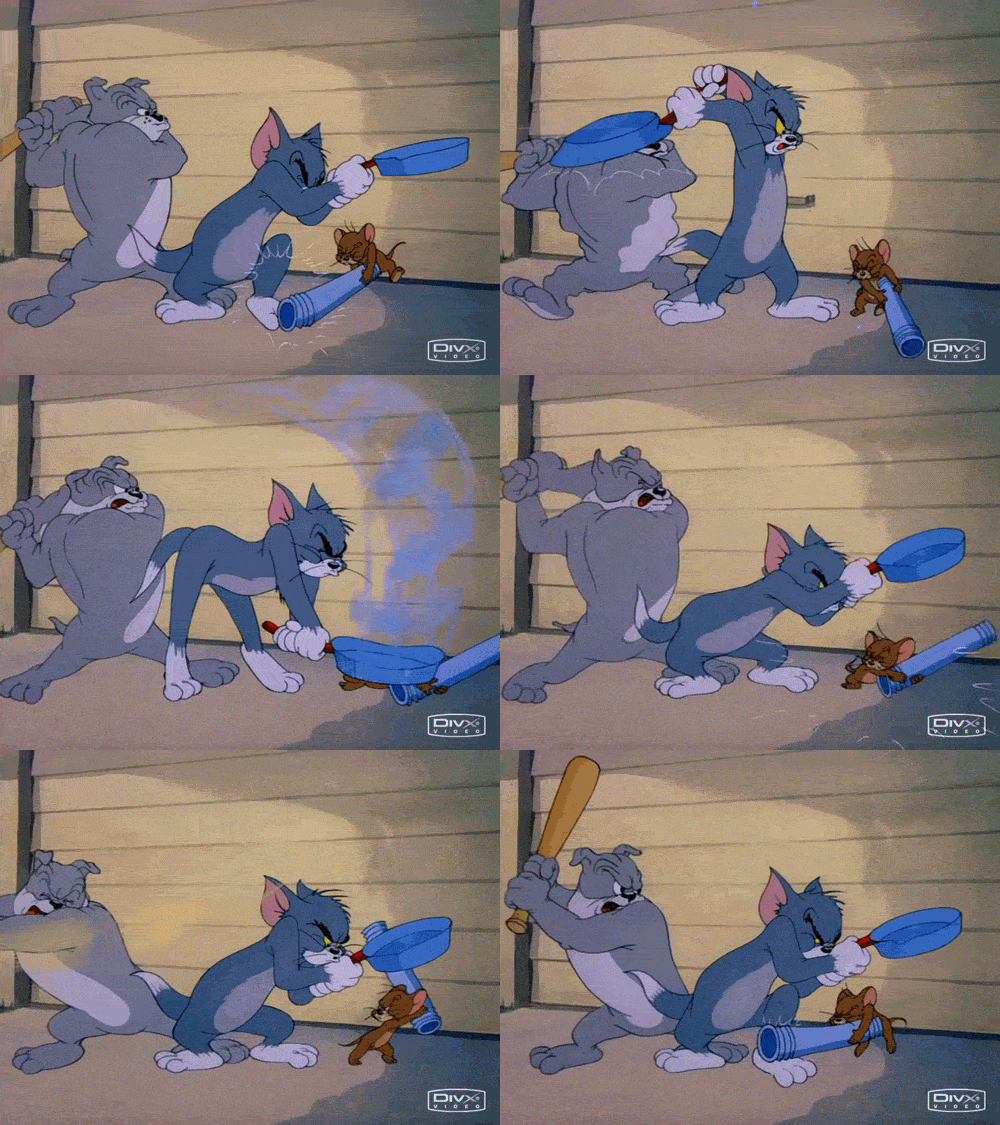
Think about Tom and Jerry. The production pipeline has changed dramatically over time, but what made it work did not: clear character dynamics, storytelling, timing, emotional rhythm, and direction.
No one remembers it because of production method. People remember it because the story and craft were timeless. That is the lesson for AI design: tools evolve, fundamentals endure.
What stays constant for designers
In design, the constants are not tools. The constants are human expectations. People still want clarity, still trust products that are legible, and still avoid systems that feel opaque and risky.
That is why I spend more time with durable ideas than launch announcements. When I need to reset my own thinking, I revisit the Frameworks section, especially Agentic UX, because it forces me to design from first principles: trust, reversibility, and user control.
Why trust is the real AI moat
In traditional software, users ask, “Can this do what I need?” In AI software, they also ask, “Should I trust this enough to act on it?” That second question determines adoption.
Trust is built through interaction behavior: showing sources, signaling uncertainty honestly, making changes inspectable, and giving users meaningful control. As I wrote in The Trust Stack, trust is not a visual style. It is product architecture.
Patterns like Citation Tooltips and Smart Diff matter because they reduce ambiguity exactly when a user has to decide whether to proceed.
Prompting is not a trick. It is a discipline.
Prompting is often framed as a bag of hacks. That framing misses the point. Good prompting looks like good design thinking: clear intent, useful context, explicit constraints, structured output, and iteration.
That is why I treat prompting as a core design skill, not a temporary trend. The resources in Prompts and Playbooks are most useful when used as systems for thinking, not templates to copy blindly.
The hidden risk of this moment
AI can multiply output, and that can feel like progress. Sometimes it is. But speed can also hide drift. Teams can ship more while understanding less, and generate more concepts while weakening decision quality.
The designers I trust most right now are not just fast makers. They are strong editors who know what to keep, what to cut, and what standards should not move.
Where to put your energy
For AI design, the long-term bets are obvious. No user is asking for less transparency, less control, or less trust.
If you are feeling behind, invest heavily in craft, trust design, structured prompting, and pattern literacy. Tools will keep changing, but those skills keep paying dividends.
Explore more on AI UX Playground
Also published on Substack
Read or discuss on Substack →Weekly insights in your inbox
A weekly newsletter for designers, PMs, and builders shipping AI products. Practical AI UX: patterns, real products, no hype.