Affinity Mapping Assistant
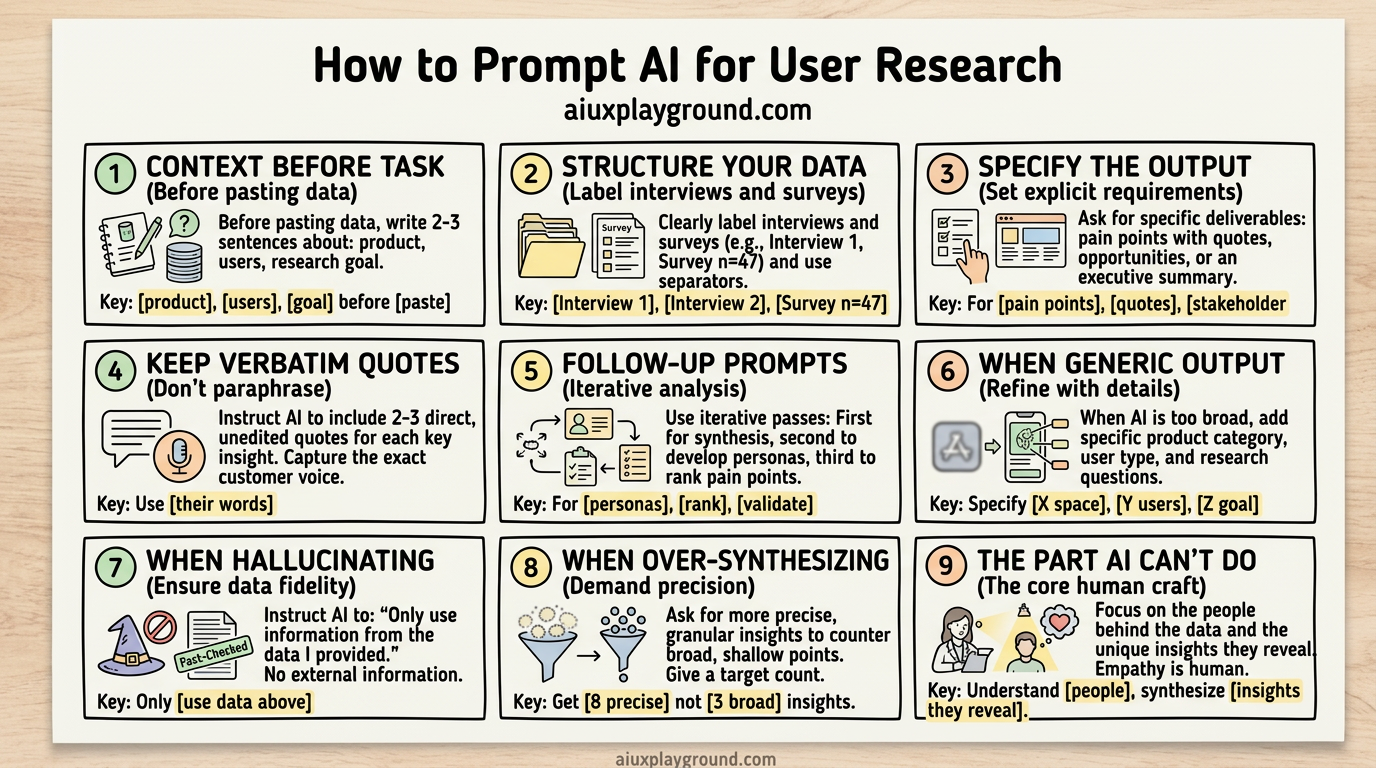
Synthesize raw qual data (interviews, usability, diaries) using an affinity-style flow: clean, code, cluster into themes with evidence counts, outliers, severity-weighted ranking, and surprises.

Prompt
Act as a Principal UX Researcher specializing in qualitative data analysis and synthesis.

I have raw observational data from [number] research sessions. Help me synthesize it using an affinity mapping approach.

Study Context:
Research Method Used: [e.g., moderated interviews, usability sessions, diary study]
Participant Profile: [brief description]
Key Research Questions This Study Was Answering: [list them]

Raw Data (quotes, observations, notes):
[Paste your raw data here - quotes, paraphrased observations, sticky note content, etc.]

Please do the following:

1. Clean the Data
   Remove duplicates, fix obvious transcription errors, and flag any notes that are too vague to use as evidence.

2. Code the Data
   Assign a short descriptive code (2-5 words) to each observation that captures its meaning.

3. Cluster into Themes
   Group the coded observations into 5-8 themes. For each theme:
   - Give a clear, insight-driven name (not just a label like "navigation" - write it as a finding, e.g., "Users abandon checkout when payment errors lack recovery guidance")
   - List the supporting data points underneath
   - Note how many participants this theme appeared across (e.g., "8 of 10 participants")

4. Identify Contradictions and Outliers
   Flag any data points that contradict the main themes, and note which participant segment they came from.

5. Rank Themes by Frequency and Severity
   Sort themes from most to least critical based on how often they appeared AND how much they impacted the participant's experience.

6. Surface Unexpected Findings
   Highlight anything surprising, counterintuitive, or that challenges existing assumptions the team holds.

Format the output as a structured synthesis report with clear headers. Use direct, active language.

Follow-ups you may use: "Which theme is most likely to surprise the product team? Write a one-paragraph narrative to lead the readout." If the data shows contradictory behaviors within a segment, preserve that tension rather than smoothing it over.
How to use
- 1Anonymize data before pasting (names, employers, identifiers).
- 2Prefer Session Debrief From Transcript notes over raw transcripts when you have more than a few sessions.
- 3For best nuance, feed roughly 10-15 sessions per batch; merge batches in a second pass if needed.
- 4After clustering, sanity-check against your raw notes for miscategorized or missing evidence.
Pro Tips
- • AI surfaces text patterns - you still validate that themes reflect real experience, not repeated wording.
- • Use frequency-plus-severity ordering to sequence a readout without a separate prioritization step.