Research Insight Statement Writer
Turn themes and observations into decision-ready insight statements (Observation, Pattern, Implication, Recommendation) plus a short exec "So What" summary. Use after synthesis or affinity output.

Prompt
Act as a Principal UX Researcher who translates research findings into compelling, decision-driving insights.

I have the following raw observations, themes, or synthesis from a recent study:
[Paste your themes, observations, or synthesis notes here]

Study context:
What the study was investigating: [brief description]
Who the participants were: [brief profile]
What decision this research informs: [e.g., whether to redesign onboarding, which features to prioritize for Q3]

Please write a polished insight statement for each major theme using this structure (use all four components for each):

Observation: What we directly saw or heard participants do or say (grounded in evidence, no interpretation yet)
Pattern: How widespread or consistent this was across participants (frequency, segments affected)
Implication: What this suggests about needs, mental models, or pain points (stay within what the data supports)
Recommendation: One specific, actionable thing the product team should consider (respect team constraints if I list them below)

Additional requirements:
- Plain, jargon-free language a non-researcher can scan in about 30 seconds per insight.
- Avoid hedging ("might," "could possibly," "seems like") unless uncertainty is real - then say what is unknown.
- Do not prescribe a specific design unless the data clearly supports it.
- Order insights from most to least impactful on user experience.

After all insights, write a one-paragraph "So What" summary a VP could read in about 60 seconds.

Optional outputs on request: (1) a one-line headline per insight for exec slides, (2) which insight most challenges current roadmap assumptions and why.

Team constraints for recommendations (if any): [budget, timeline, platform, compliance - or "none specified"]
How to use
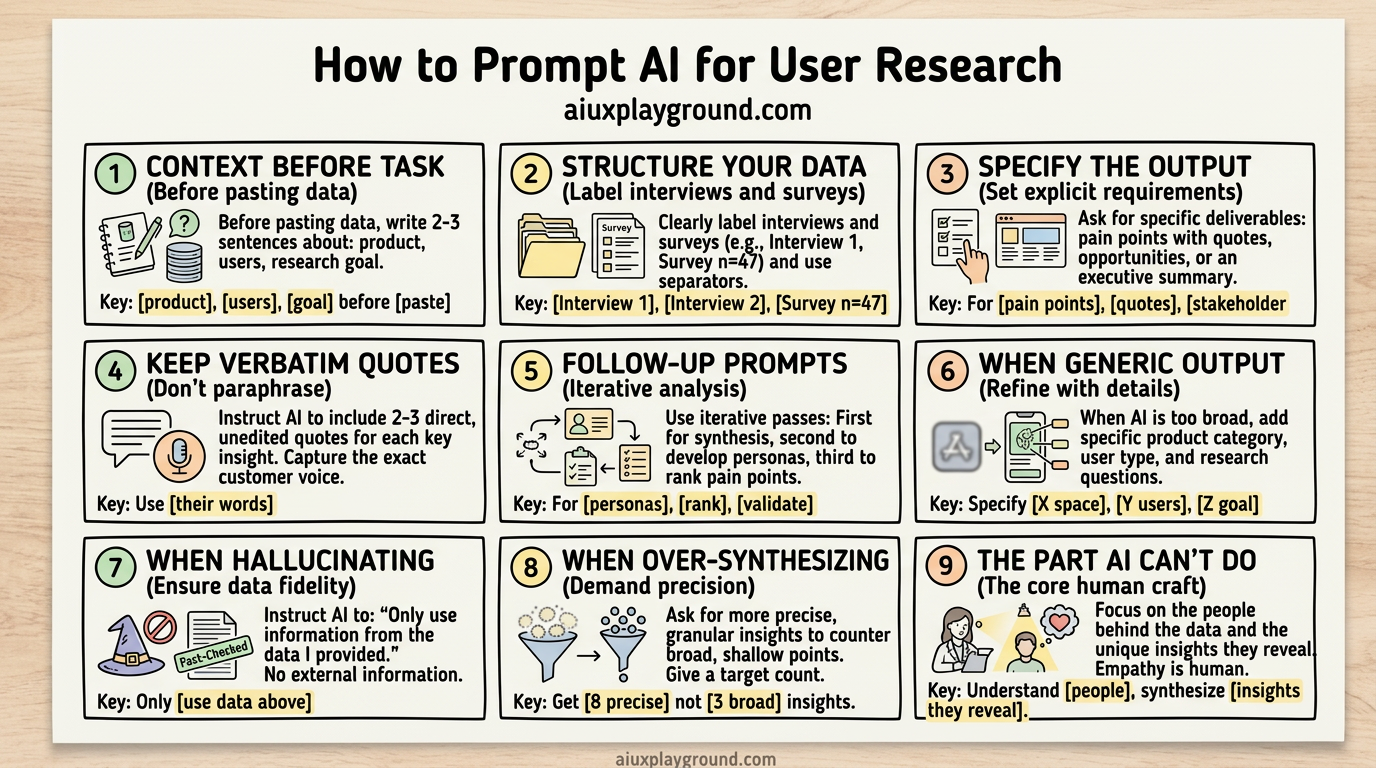
- 1Paste grounded notes or affinity output; avoid paraphrasing away evidence.
- 2If two insights feel redundant, follow up: "Merge or differentiate insights 3 and 5."
- 3Pressure-test implications: dial back anything the data does not actually support.
Pro Tips
- • Recommendations need your judgment on feasibility - add constraints in the bracketed section.
- • Use the "So What" paragraph as the opener before detail in a review meeting.