Mixed-Source Research Synthesis
Combine already-coded interviews, surveys, and analytics into one report. For a single session use Session Debrief From Transcript. To cluster interview notes, use Affinity Mapping Assistant, then Research Insight Statement Writer.

Prompt
Use this only when combining mixed sources (interviews + survey + analytics) that are already summarized or coded. If this is one transcript, stop and run a session debrief instead. If this is raw interview notes to theme, use affinity mapping first.

Synthesize the following mixed research data into one report:

[Paste research data: interviews, surveys, usability tests, analytics]

Provide:

1. Key Findings Summary
   - Top 3-5 most important insights
   - Patterns and themes across data sources
   - Surprising or unexpected discoveries

2. User Pain Points
   - Most critical pain points ranked by severity
   - Frequency and impact of each pain point
   - Quotes or evidence supporting each point

3. User Needs and Goals
   - Primary user goals
   - Unmet needs
   - Motivations and behaviors

4. Opportunities
   - Design opportunities based on findings
   - Quick wins vs. long-term improvements
   - Potential impact of addressing each opportunity

5. Recommendations
   - Specific design recommendations
   - Prioritized action items
   - Success metrics for each recommendation

Format as a structured report ready for stakeholder presentation.
How to use
- 1If you have one transcript, use Session Debrief From Transcript. If you have several interviews to theme, use Affinity Mapping Assistant, then Research Insight Statement Writer. Use this prompt only to fold sources together.
- 2Organize your research data: Copy interview transcripts, survey responses, usability test notes, or analytics screenshots into a document
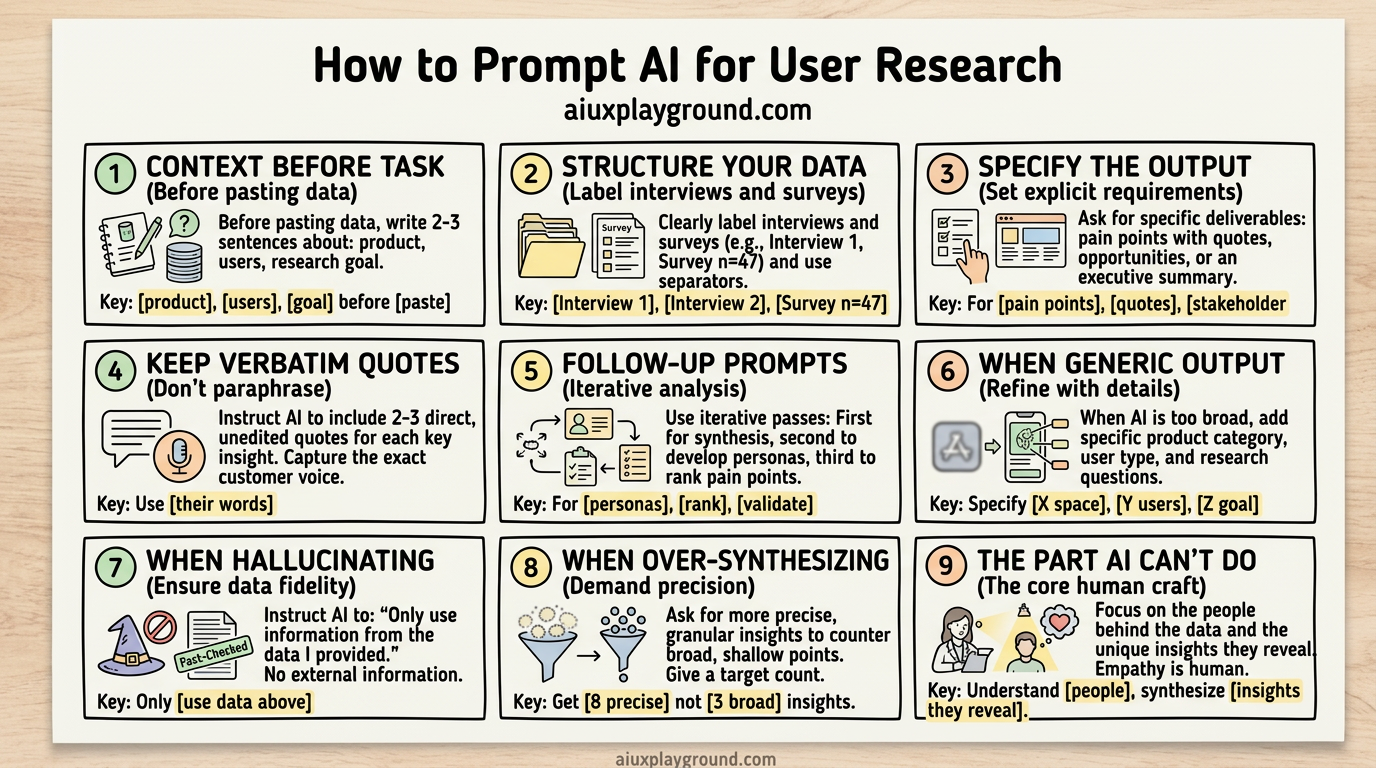
- 3Add context FIRST: Before the prompt, write 2-3 sentences about your product, target users, and research goals. Example: "We're building a B2B SaaS dashboard. We interviewed 10 product managers about their workflow. Goal: Improve onboarding."
- 4Copy the prompt and paste into your preferred AI tool, like ChatGPT or Claude (choose one with longer context capabilities if you have large datasets)
- 5Replace [Paste research data] with your organized data. Format: "Interview 1: [transcript]" "Survey responses: [data]" etc.
- 6If you have images (screenshots, journey maps): Upload them to AI tools that support image analysis and say "Analyze these alongside the data"
- 7Review the synthesis and ask targeted follow-ups: "Create user personas from these insights" or "Rank pain points by severity" or "Suggest 3 quick wins"
Pro Tips
- • Keep participant quotes verbatim - they add authenticity and evidence
- • If you hit character limits: Synthesize multiple research sessions separately, then ask the AI to combine insights
- • For quantitative data: Paste survey results as tables or bullet points with numbers
- • Ask "What am I missing?" to get the AI to identify gaps in your research
- • Export as Markdown or copy to Notion/Confluence for team collaboration
- • This is not the default synthesis prompt. Canonical path: Session Debrief → Affinity Mapping Assistant → Research Insight Statement Writer → Research Readout Builder.